
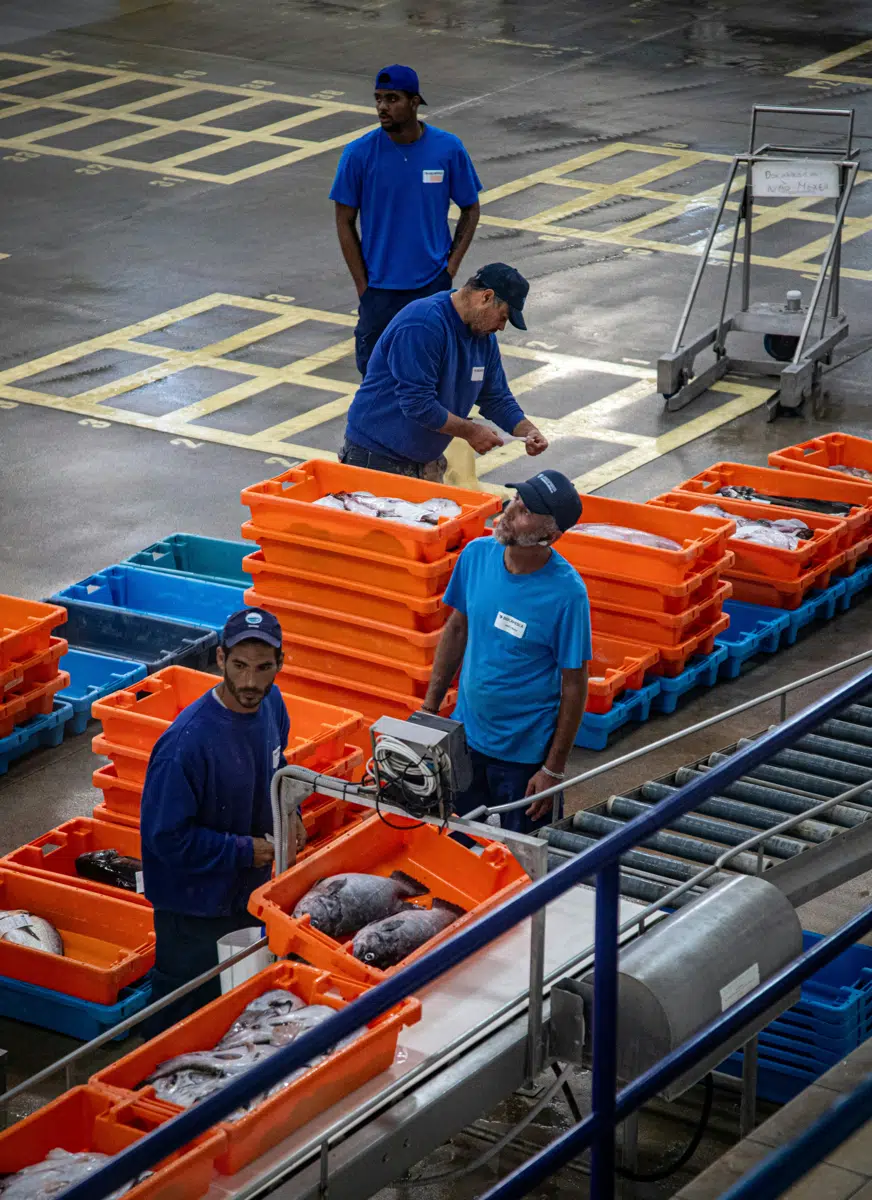
Here’s the uncomfortable math of the China trade: serious buyers order at volumes a single small harvester or plant often can’t fill. The big processors solve it with scale. Small operators have historically been shut out, not because their product is worse (it’s frequently better) but because nobody wanted to assemble a container from six sources.
That assembly is exactly the job we do.
Why buyers want volume
A volume buyer’s own commitments (distributors, retail chains, banquet suppliers) need dependable supply on a schedule. Partial loads are inefficient and erode the relationship. So the premium pricing attaches to reliable, consolidated volume, and single small suppliers rarely see it.
How aggregation works
We combine supply from multiple Canadian harvesters and plants into buyer-scale orders. For that to work, three things are standardized across every contributing lot:
- Grading to one spec sheet: the buyer’s, confirmed before packing
- Consistent packaging and marks: every carton telling the same story
- One documentation set: certificates and codes covering the consolidated load correctly
Your lot rides inside a container it couldn’t have filled alone, and prices like it.
What it asks of you
Discipline more than size: grade honestly to the spec, pack to the standard, hit your slot in the schedule. The suppliers who thrive in an aggregation model are the ones who treat a quarter-container commitment as seriously as a full one.
What it changes
Small operators get access to buyer-scale pricing; the buyer gets Canadian supply without managing six relationships; and the risk of any one supplier’s short week is absorbed by the pool rather than sinking the order.
If you’ve ever been told your volumes are too small for export, that’s the problem this model exists to solve. Tell us what you land and we’ll tell you where it fits.