Home / FAQ
Questions, Answered Straight
The questions Canadian suppliers actually ask us before selling fish to China, including the uncomfortable ones.
Getting started
Who actually buys my product?
A specific volume buyer in China with whom we have a direct, in-person relationship, purchasing at container scale on a recurring basis. Identity is confidential (the relationship is the asset), but the nature, cadence and terms are laid out plainly in every deal. You are never being posted to a marketplace or shopped to strangers.
I'm a small operation. Is my volume too small?
Probably not. We aggregate supply from multiple harvesters and plants into buyer-scale orders graded to one spec. Small lots ride inside containers they couldn't fill alone, and price like it. This is the mechanic that gets wharf-scale operators container-scale economics.
What species do you take?
Ten core species across shellfish and finfish; see the species pages. Current demand is strongest for flat species: halibut, flounder and turbot, which sells in China as Greenland halibut. If China buys it and you land it, we can have the conversation even if it's not listed.
Why does the buyer want whole fish?
Because that's how the Chinese market prefers to buy, especially for flat species: whole, graded by size, and ideally flash frozen offshore. For suppliers this is good news, since it means less processing between the catch and the sale, and product frozen at sea grades to the top of the market.
How fast can a first shipment happen?
Depends almost entirely on your registration status. Plants already registered for China can move in weeks; plants starting the GACC pathway should think in months. Either way, starting the conversation early is free, and the current tariff suspension window puts a premium on starting now.
Do you work with US suppliers?
Our current focus is Canadian supply. A US pathway (FDA/NOAA lanes) is planned. Get in touch and we'll tell you honestly where that stands.
Cost and payment
What does it cost to work with you?
Nothing upfront. We earn a disclosed commission on completed deals only. No retainers, no listing fees, no charge for compliance navigation. If your product doesn't sell and ship, you pay nothing.
How do I know I'll get paid?
Deals are structured so your money is secured before product leaves your control: deposit plus balance against documents, or title held until funds clear. The structure is agreed in writing per deal, before anything is packed. See Getting Paid for the mechanism.
What happens if the buyer rejects the load on arrival?
Deal terms are built to prevent the classic rejection squeeze: acceptance criteria agreed up front, documentation proving spec and cold chain, and our mediation on the China side. A lot that provably left the dock on-spec and cold gives a bad-faith rejection very little to grip.
Who handles a dispute with the buyer?
We do. The buyer relationship is ours, and our partner on the ground mediates in-market and in-language. You are never fighting a counterparty across an ocean alone.
When do I see the commission?
Before the deal, in writing, on the same page as the payment terms. You can compare the projected net against your current channel before committing anything.
Tariffs, registration and paperwork
Aren't there tariffs on Canadian seafood in China?
The 25% tariff imposed in March 2025 was suspended effective March 1, 2026, through the end of 2026. Coverage is confirmed per species in every deal. Our tariff status page keeps the dated, sourced picture.
My plant isn't registered for China. Can I still start?
Yes. That's most of our first conversations. GACC registration under Decree 280 runs through the CFIA as Canada's competent authority; we navigate the pathway with you. Start before you have a buyer deadline.
What is GACC registration, in one paragraph?
China's customs authority (GACC) requires foreign food establishments to be registered before their product can enter. Aquatic products are classed as high-risk, so you can't self-register: CFIA must recommend your establishment through the CIFER system. Decree 280, which replaced Decree 248 on June 1, 2026, is the current rulebook.
Is the paperwork on me?
The legal obligations sit with you as the exporter, but the navigation is ours: GACC registration, CFIA certification coordination, health certificates, registration-numbered labelling, HS/CIQ codes. To be precise about roles: CFIA and GACC issue the certificates and registrations; we make sure your file moves through their systems correctly.
Do you issue the health certificates?
No, and be wary of anyone who implies they do. Export certificates come from CFIA and registrations from GACC. Our role is coordination: assembling the file, catching the errors that cause rejections, and keeping your documentation aligned with the current rules.
Logistics and product
Do you handle live product?
Yes. Live lobster, geoduck and Dungeness run the live-hold and air-freight lane; frozen product rides set-point reefer containers. We route product to whichever lane nets you more.
I'm nowhere near Vancouver or Halifax. Does that rule me out?
No. Frozen product moves by reefer container, and reefers reach any major Chinese port from Canadian ports on scheduled services. Your distance from tidewater is a trucking cost, not a market barrier, and it goes into the deal math up front.
What does 'flash frozen offshore' mean and why does it matter?
It means the fish was frozen at sea, within hours of the catch, rather than trucked to a plant first. For whole flat species in the China market, offshore-frozen product commands the top of the grading, so if your vessel freezes at sea, tell us early: it changes how your lot is presented and priced.
When does demand peak?
Around the festival calendar. Chinese New Year and Mid-Autumn Festival drive the biggest buying peaks, especially for banquet and gifting products. Loads planned to arrive into those windows are worth more than the same loads arriving after them, which is why timing is part of every deal conversation.
What's an unbroken cold chain, practically?
Temperature-controlled at every step, and documented at every step: blast freezing or live-hold at origin, reefer set points logged in transit, cold storage on arrival. The documentation matters as much as the temperature, because the log is what proves your lot arrived as it left.
About us
What's your track record?
Our value is structural, and we'd rather show you structure than adjectives: the vetted buyer, the in-market partner, the mapped compliance pathway, and success-based terms. We published the due-diligence questions to grill any export partner with; use them on us.
Why should I use a broker at all?
You shouldn't, if you have a vetted China buyer, staff who work in Mandarin, a GACC-current compliance file and time to manage reefer bookings. Most small and mid-size operations have none of those, and building them in-house costs more than a commission on deals that actually close.
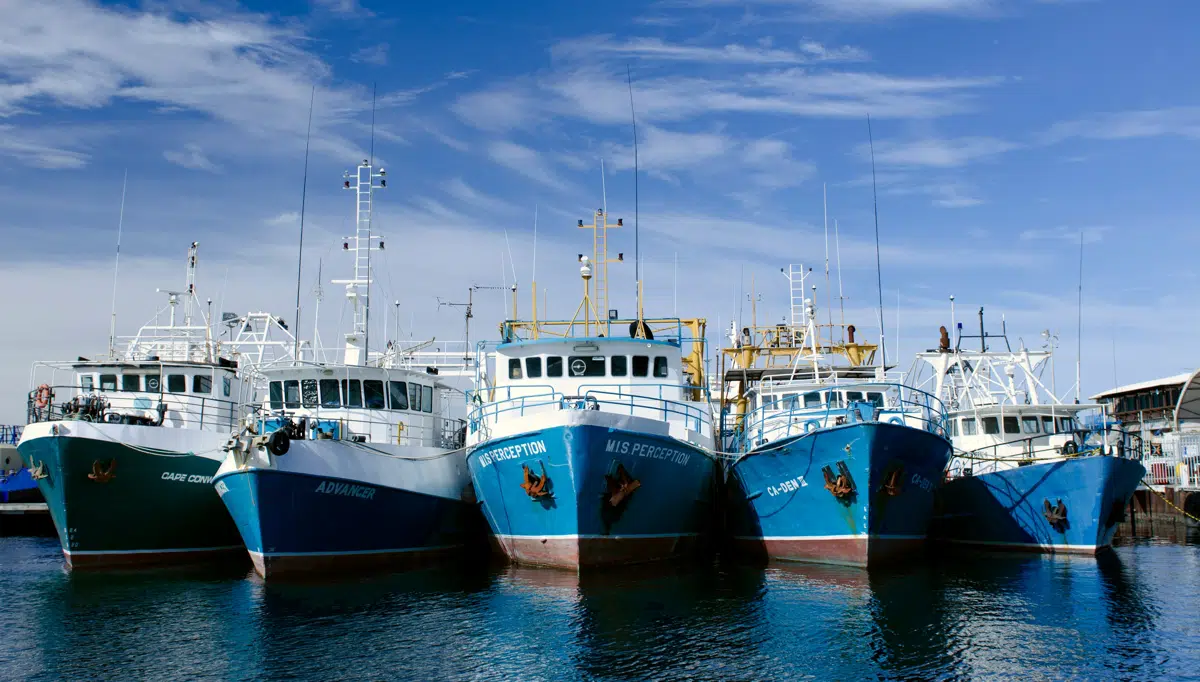
Both coasts, wharf scale welcome
Further reading
Longer answers, in the guides
How to export seafood to China from Canada
The full pathway in one guide: registration, certification, cold chain and payment.
The suspended aquatic tariffs, explained
What the suspension covers, how long the window runs, and what it means for your pricing.
How to GACC-register your plant
The registration pathway for Canadian establishments, step by step under the current rules.
Question not here?
Ask it directly. You'll get the same straight treatment, and if we don't know, we'll say so and find out.