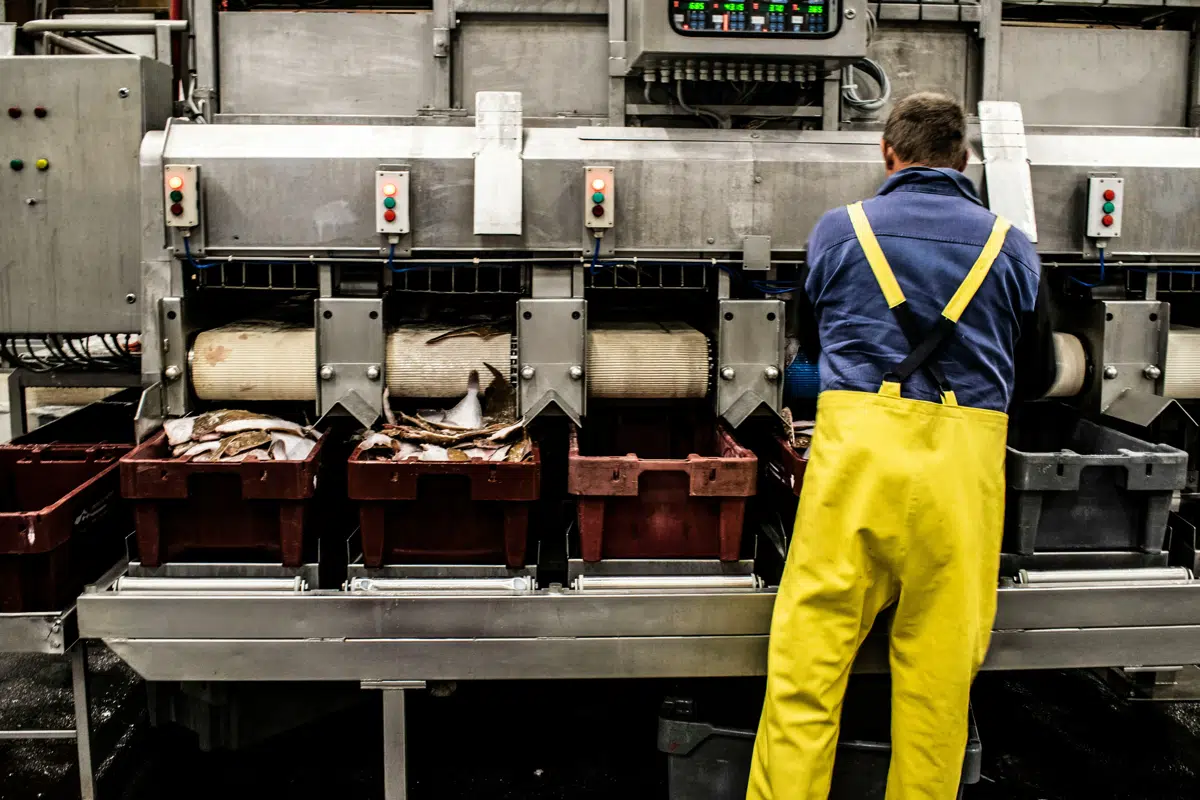
Why the buyer wants it: Chinese buyers are specific about form. Whole and head-on presentation signals freshness and authenticity and suits whole-fish banquet service; size and roe grading to spec is what earns the price tier. A shore plant is where that spec gets met, or missed.
Onshore processing for China runs through establishments licensed under the Safe Food for Canadians Regulations, with the plant's registration status determining what can legally ship. Because aquatic products are treated as higher risk in China's system, the plant also needs to be registered with GACC on the CFIA's recommendation before product can clear. If your plant is not yet registered for China, that is a pathway we help you navigate, not a wall.
Product forms span whole, head-and-gutted, fillets and portions, but the rule that surprises first-time exporters is: do not default to fillets. Confirm the buyer's preferred form before cutting. Minimally-processed product is often worth more in this market, not less, because whole and head-on fish signals freshness to the Chinese table and leaves the buyer free to reprocess to their own spec. Cutting first can quietly destroy the premium.
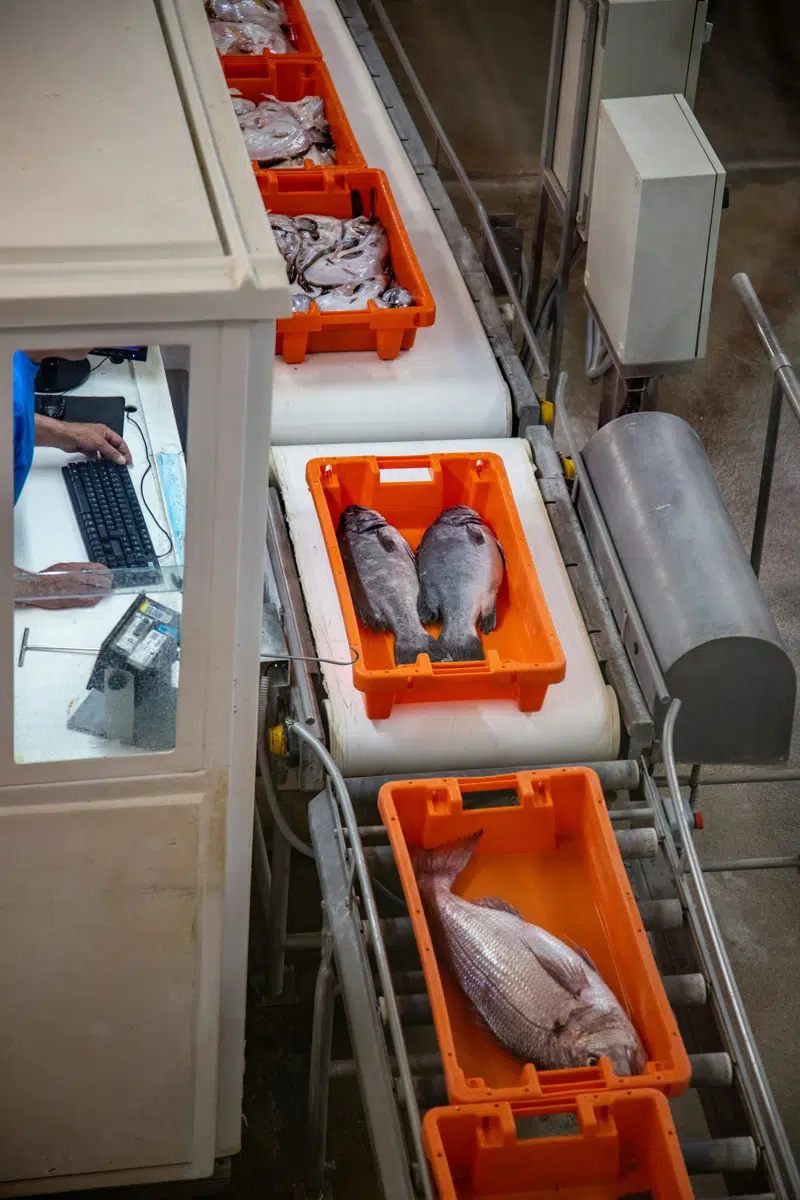
Grading is where the price tier is actually earned. Size bands, roe condition, colour and packing counts are agreed against the buyer's spec sheet before the plant starts, and the plant's job is to hit them consistently across every lot. A load that grades unevenly invites renegotiation on arrival; a load that grades exactly as documented is the reputation that gets the next order.
Lot traceability, correct inner and outer packaging marks, and cold storage discipline round out the plant-side work. Every carton that reaches China has to carry the marks China requires, including the establishment registration numbers, and the paperwork has to match the physical load exactly. We confirm the buyer's spec sheet with you, coordinate grading and packing to it, and prepare the documentation set alongside the production run rather than after it.
For smaller plants, aggregation is the practical unlock. You do not need to fill a container alone: we combine supply from multiple plants and harvesters to reach container scale, with grading and marks held consistent across the load. Payment is secured before product leaves the dock, and our commission is success-based, so a plant that packs to spec carries no marketing risk on the China side.
Go deeper
Shipping & handling
Success-based, dock-secured
Payment is secured before product leaves the dock, and our fee is a success-based commission. You are paid for what ships; we are paid when it sells.
What this means for you
If you run an independent plant, China is reachable without adding sales staff or learning Chinese customs law. The plant-side work is the work you already do well, pointed at a written spec.
- Ask before you cut: whole and head-on often outsells fillets in this market.
- Registration status decides eligibility. We assess yours in the first conversation.
- Your existing SFC discipline (traceability, coding, cold storage) is most of the technical requirement.
- Partial volumes are welcome: aggregation to container scale is our standard model.
Division of labour
What we handle, what you handle
We handle
- The buyer relationship, spec sheet and price negotiation
- GACC registration pathway coordination with your CFIA contacts
- Consolidation across plants and harvesters to container scale
- The documentation set: certificate coordination, labelling checks, HS and CIQ codes
- Payment security before product leaves the dock, on success-based commission
You handle
- Processing and grading to the agreed spec sheet
- Inner and outer packaging marks as specified for China
- Lot traceability and production records
- Cold storage until the reefer is stuffed
Plant readiness for a China order
- SFC licence covers the activities and export
- Establishment appears on Canada's approved list with its CFIA ID
- GACC registration in place, or the pathway started through CIFER
- Buyer's spec sheet confirmed in writing before production
- Packaging marks include the required registration numbers
- Cold store capacity confirmed through to stuffing date
Related reading
The small processor's guide to China buyers
How an independent plant sells into China without a sales office in Shanghai.
The small processor's guide to China buyersAt-sea vs onshore processing
The two processing routes compared: quality, registration and what the buyer pays for.
At-sea vs onshore processingHow to GACC-register your plant
The step-by-step registration pathway for Canadian establishments, in plain language.
How to GACC-register your plantFlatfish demand in China is strong right now.
Our buyer is purchasing halibut, flounder and turbot at multiple-container volume: whole fish, flash frozen offshore. Tell us what you land and get a real price read, with nothing owed unless your product sells and ships.