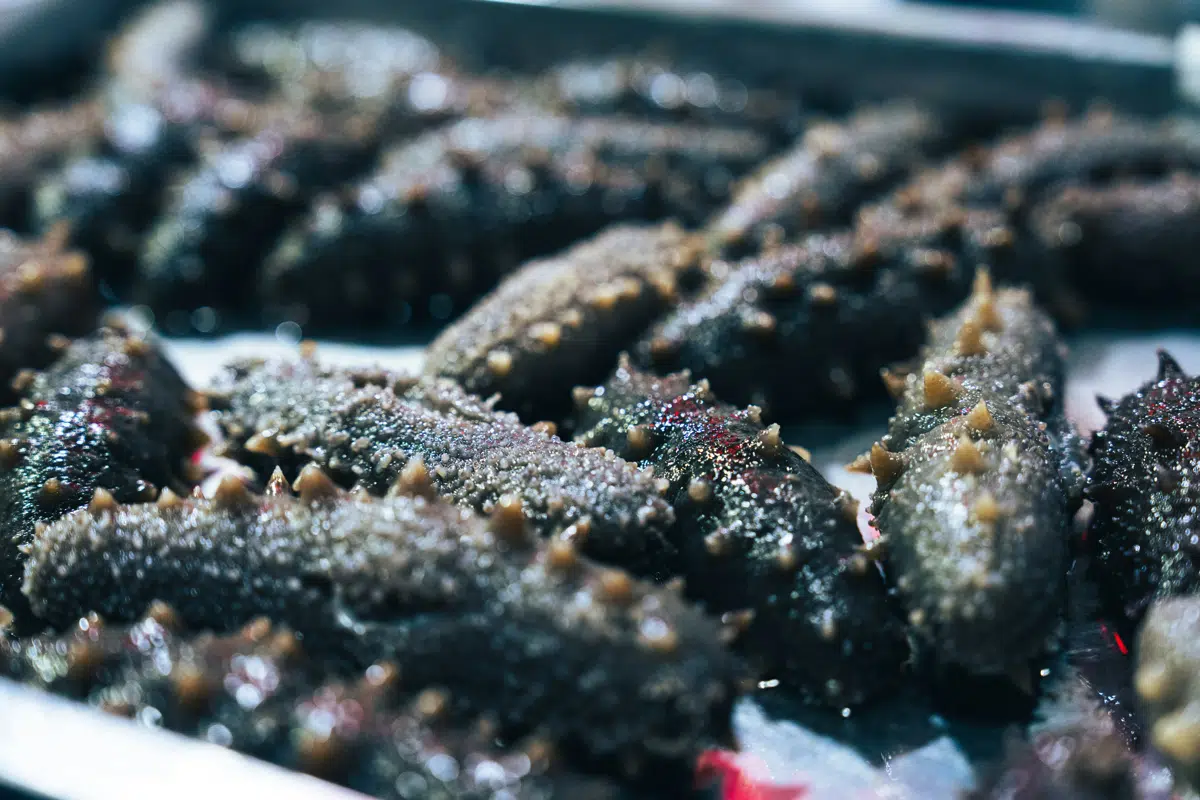
Two Canadian species trade almost entirely on grade: sea cucumber, a delicacy with centuries of standing in Chinese cuisine, and sea urchin, where the roe is the entire product.
Sea cucumber: the traditional delicacy
Canada harvests cold-water sea cucumber on both coasts (Parastichopus californicus in BC, Cucumaria frondosa in the Atlantic), feeding a Chinese market where the product carries banquet and gift status and moves frozen and dried. Grade and preparation drive the price band: size, integrity and processing consistency are what the buyer is paying for, and cold-water Canadian product enjoys a strong reputation. Frozen product rides the reefer lane; dried product still carries the full labelling-and-codes obligations of the documentation layer.
Sea urchin: the roe is the product
With uni, the flesh is incidental: roe percentage, colour and grade set the price, full stop. Canada’s green and red urchin fisheries on both coasts supply a market spanning China and Japan, with premium fresh uni flying by air and frozen roe riding reefer. The supplier disciplines: harvest timed to roe condition, gentle handling that protects roe integrity, and grading honest enough to build a buyer’s trust shipment over shipment.
The shared truth
Neither trade rewards volume without grade. Both reward the boring virtues: timing, handling, honest sorting, and paperwork that matches the load. Both also fit smaller operators well: high value density means meaningful revenue at modest volumes, and aggregation covers the rest.
For the harvester deciding
If you’re landing either species and selling into a generic channel, there’s a strong chance the grade premium is leaking away between your wharf and the final market. Sea cucumber · Sea urchin · Get a straight read on yours.