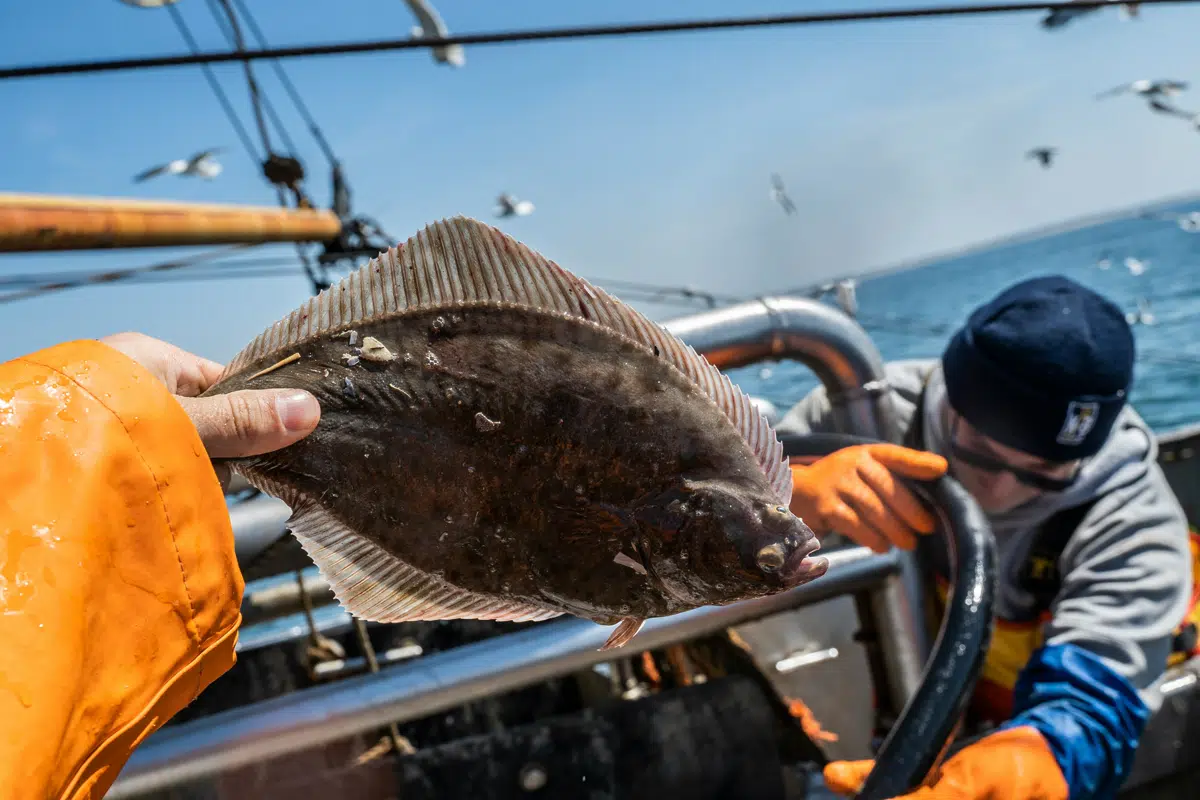
First, the naming, because getting it wrong marks an outsider instantly: in Atlantic Canada, “turbot” means Greenland halibut (Reinhardtius hippoglossoides), a deep-water flatfish of the Northwest Atlantic. It is not the European turbot. China knows the difference; so should every document in the chain.
The market
Greenland halibut has genuine, established demand in China and wider Asia: rich, high-fat flesh suited to Chinese cooking, moving as frozen whole and head-and-gutted product, with reprocessing in China common. That reprocessing habit is why buyers weight consistency so heavily: they’re feeding their own production lines.
Frozen-at-sea is the quality story
Much of the fishery’s China-bound product is frozen at sea: headed, gutted and blast-frozen within hours of the haul on factory vessels working the deep water off Newfoundland and the North. FAS locks peak freshness before transit begins, and the Asian trade treats it as a quality tier of its own.
The forms conversation
Whole, H&G, block or IQF: agreed with the buyer up front and held lot to lot. The onshore route serves this fishery too; what matters is that format, grading and marks are uniform across the program.
The lane
Reefer, entirely: set-point containers on scheduled Pacific services, with the temperature record part of the acceptance story. Volume programs suit aggregation where single sources run short of container scale.
For the operator deciding
If you fish or process this species, you’re sitting on a product China already buys. The question is whether your program (format consistency, cold chain, documentation) is built to capture it. That build is our job. Species page · Start here.